
Parkinson’s Disease: What You Need to Know | Symptoms, Stages & Care
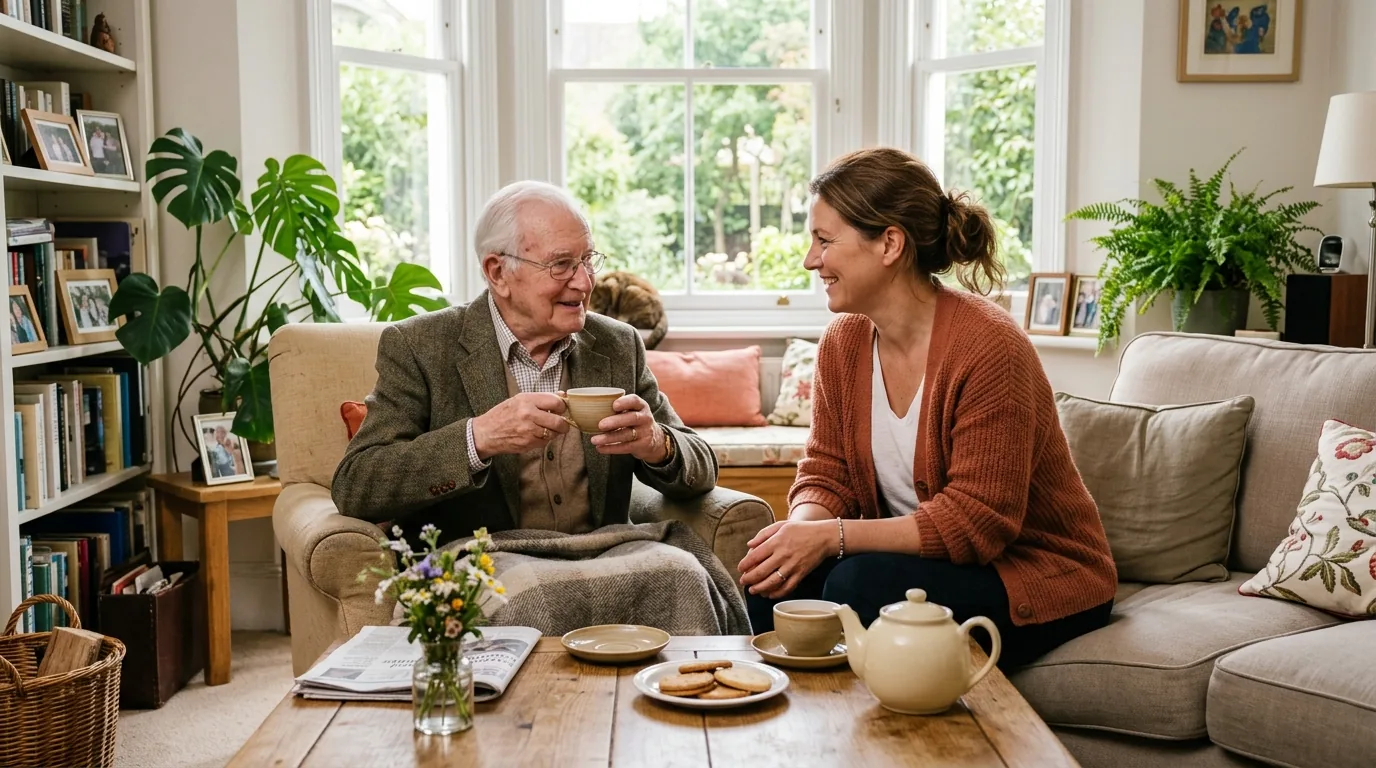
Receiving a diagnosis of Parkinson’s disease for yourself or a loved one is a life-altering moment. As the fastest-growing neurological condition in the world, Parkinson’s affects around 153,000 people across the UK. While hearing the diagnosis can be daunting, understanding how the condition progresses, how to manage symptoms, and how to access specialized daily support can help your loved one maintain an active, dignified, and fulfilling life at home.
Parkinson’s is a progressive neurodegenerative disorder caused by the gradual loss of nerve cells in a part of the brain called the substantia nigra. These cells are responsible for producing dopamine, a vital chemical messenger that coordinates smooth, controlled muscle movement. As dopamine levels decline, movement becomes increasingly difficult to initiate and control.
In this complete UK family guide, we demystify the primary symptoms of Parkinson’s, explore non-motor warning signs, explain the critical importance of medication timing, and outline how dedicated private home care in the UK provides the flexible, one-to-one support necessary to thrive in familiar surroundings.
1. The Four Core Motor Symptoms (The "TRAP" Framework)
Parkinson’s is primarily classified by its physical movement symptoms, commonly remembered by medical professionals using the acronym TRAP:
- Tremor: Typically starting in one hand or finger when at rest (often described as a "pill-rolling" motion between the thumb and index finger). It usually subsides during voluntary movement or sleep.
- Rigidity: Persistent muscle stiffness, tension, and resistance in the arms, legs, or neck (known as "cogwheel rigidity"), making ordinary movements like turning in bed or swinging arms while walking painful and exhausting.
- Akinesia / Bradykinesia: Extreme slowness of physical movement. Everyday tasks—such as fastening buttons, cutting food, or getting out of an armchair—take significantly longer. It can also cause sudden "freezing" episodes where the feet feel temporarily glued to the floor.
- Postural Instability: Impaired balance and loss of righting reflexes, often leading to a forward-stooped posture and a high risk of domestic falls. (Learn essential recovery steps in our guide on how to safely help an elderly person after a fall).
2. Key Non-Motor Symptoms (The Hidden Challenges)
While motor symptoms are the most visible, Parkinson’s impacts many bodily systems far beyond movement. Non-motor symptoms often emerge years before a formal diagnosis and can have an even greater impact on daily quality of life:
- Sleep Disturbances: Vivid dreams, thrashing in sleep (REM Sleep Behaviour Disorder), restless legs, and daytime drowsiness.
- Loss of Smell (Anosmia): A reduced ability to detect odours, often one of the earliest signs of dopamine depletion.
- Cognitive and Mood Changes: Anxiety, apathy, depression, and mild memory lapses. In advanced stages, some individuals may develop Parkinson's-related dementia or hallucinations. (Read our guide on understanding mixed dementia and cognitive decline).
- Autonomic Dysfunctions: Severe constipation, urinary urgency, and sudden blood pressure drops upon standing (postural hypotension) causing dizziness.
- Speech and Swallowing Difficulties (Dysphagia): Softer, monotone speech (hypophonia) and slower swallowing reflexes.
3. Navigating the Stages of Parkinson’s Progression
Parkinson’s affects everyone differently, and symptoms progress at varying speeds over many years. Generally, the condition moves through three main phases:
The Early Stage
Symptoms are usually mild, affecting only one side of the body (unilateral). The individual remains largely independent, manages daily routines, and responds well to initial dopamine-replacement medications (the "honeymoon period").
The Mid Stage
Symptoms become bilateral (affecting both sides of the body). Balance issues emerge, movements slow down, and "on-off" motor fluctuations begin—where medication wears off before the next dose is due, causing sudden stiffness and fatigue. The individual will likely need regular assistance with bathing, dressing, and cooking.
The Advanced Stage
Mobility is significantly restricted, with frequent freezing episodes, high fall risks, and potential cognitive or swallowing difficulties. Round-the-clock physical assistance or dedicated live-in care is essential to ensure safety and comfort at home.
Need Specialist Parkinson’s Care in the Comfort of Home?
Parkinson’s requires unhurried, adaptable support. Connect directly with fully vetted, self-employed private carers across the UK experienced in Parkinson’s disease, mobility assistance, and live-in care—saving up to 35% on standard agency fees.
👉 Browse Specialist Parkinson’s Carers | 📞 Call 0333 344 0645
4. The Golden Rule of Parkinson’s: Medication "On-Time, Every Time"
For individuals taking dopamine replacement therapies—such as Levodopa / Carbidopa (Co-careldopa, Co-beneldopa), dopamine agonists, or MAO-B inhibitors—medication timing is not just a preference; it is a clinical necessity.
Even a 15-to-30-minute delay in taking prescribed doses can cause dopamine levels in the brain to plummet, plunging the person into a severe "off" state where they become completely immobile, rigid, and unable to speak or swallow. A dedicated private carer ensures that prescriptions are prompted with strict, down-to-the-minute precision every single day.
5. Practical Daily Living Strategies & Home Adaptations
Living well with Parkinson’s requires thoughtful adaptations to preserve autonomy and minimize physical strain:
- Overcoming "Freezing" Episodes: Use visual or auditory cues to unstick frozen feet. Stepping over a line on the floor, using a laser-pointer cane, marching to a rhythmic count ("1, 2, 3, step"), or listening to metronomic music helps bypass the damaged movement pathway in the brain.
- Managing Dietary Protein & Levodopa: Large amounts of dietary protein (meat, dairy, eggs) compete with Levodopa for absorption in the gut and brain. Clinicians often recommend taking medication 30–45 minutes before protein-rich meals.
- Adaptive Clothing and Utensils: Replace tricky buttons with magnetic closures or velcro, use weighted cutlery and adaptive cups with non-spill lids, and install grab rails in bathrooms and stairwells.
6. Why Dedicated Home Care with No1 Healthcare is Superior for Parkinson’s
Traditional residential care homes operate on rigid shift rotas that rarely accommodate the unpredictable physical fluctuations of Parkinson’s. Rushing someone with Parkinson’s causes stress, which directly worsens tremors and rigidity. Remaining at home with a dedicated one-to-one carer provides unmatched stability.
Through No1 Healthcare Private Carers, families benefit from:
- Total Choice of Experienced Professionals: Filter specifically for self-employed carers with certified training and extensive experience in neurological and Parkinson’s care.
- Care at Your Loved One’s Pace: A dedicated carer provides unhurried, patient assistance that adapts to their daily "on" and "off" periods.
- Flexible Hourly & Live-in Options: Choose scheduled visiting care for morning routines and meals, or continuous 24/7 live-in care for round-the-clock reassurance and night-time assistance.
- Save Up to 35% on Care Costs: By eliminating agency markups, high-quality private care is significantly more affordable.
- Uncompromising Vetting: Every professional on our platform passes Enhanced DBS/PVG checks, right-to-work verification, and direct reference screening.
- Respite Relief for Family Caregivers: Family members can arrange temporary private respite care to recharge while their loved one is in expert hands.
Ready to find the ideal support for your loved one’s Parkinson’s journey?
Speak with our friendly UK care advisors today on 0333 344 0645 or browse verified Parkinson’s carers in your local area.
Frequently Asked Questions About Parkinson’s Disease
What is the life expectancy for someone diagnosed with Parkinson’s disease?
Parkinson’s disease is not in itself a fatal condition. With modern dopamine medications, regular physical therapy, and high-quality daily care, most individuals have a near-normal life expectancy. However, advanced complications—such as falls, fractures, or swallowing issues leading to aspiration pneumonia—require careful daily management.
Why is medication timing so critical in Parkinson’s care?
Dopamine replacement medications have a short half-life in the bloodstream. If a dose is delayed by even 20 to 30 minutes, dopamine levels in the brain drop rapidly, causing the person to transition into a debilitating "off" state where they experience extreme rigidity, tremors, and an inability to move.
What causes "freezing" in Parkinson’s and how can you break it?
Freezing occurs when the brain temporarily fails to send signals to initiate the next physical movement. You can break a freezing episode using sensory cues—such as placing a visual target on the floor to step over, counting aloud ("left, right, step"), shifting weight gently from side to side, or tapping their foot rhythmically.
Can someone with advanced Parkinson’s be cared for safely at home?
Yes. With the support of a dedicated private live-in carer, home adaptations (such as profiling beds, grab rails, and non-slip surfaces), and coordination with community physiotherapists and occupational therapists, individuals with advanced Parkinson’s can remain safe, comfortable, and independent at home.
How does a private live-in carer assist someone with Parkinson’s on a daily basis?
A live-in carer ensures medication is taken on time down to the minute, assists with morning mobility and dressing during stiff periods, prepares nutritious protein-timed meals, assists with safe transfers to prevent falls, and offers continuous companionship and encouragement.
.png)
.png)
.png)
.svg)