
Demystifying Support: The Difference Between Standard Care and End of Life Palliative Care
When a loved one experiences changing health needs, families are often faced with unfamiliar terminology and difficult decisions. Many people find themselves wondering: Does my relative need a standard home carer, a visiting district nurse, or a specialist palliative care worker?
Understanding the distinction between everyday elder support and specialized comfort-focused care is essential for ensuring your loved one receives the exact assistance they need. In this guide, we demystify the differences across daily routines, emotional support, and physical care—and explain how choosing dedicated palliative home care in the UK allows individuals to remain surrounded by love and comfort in their own home.
What is Palliative Care?
To understand the differences, it is helpful to first clarify what is palliative care. Palliative care is holistic medical, physical, and emotional support designed for individuals living with a life-limiting or advanced illness—such as advanced cancer, congestive heart failure, severe COPD, motor neurone disease, or late-stage dementia.
Unlike curative treatment, which aims to cure an underlying disease, the primary goal of palliative care is to optimize quality of life. It focuses on relieving physical pain, managing distressing symptoms, reducing anxiety, and supporting the emotional wellbeing of both the individual and their family members.
Crucially, palliative care can be introduced at any stage of an advanced illness—often alongside ongoing medical therapies—and is not strictly limited to the very final days of life.
Defining Standard Home Care: Maintaining Independence and Routine
Standard home care (often delivered as visiting hourly care or companionship support) is geared toward helping older adults maintain their independence, lifestyle, and household routines when age-related frailty or mild mobility challenges arise.
A standard carer typically assists with:
- Personal Hygiene & Dressing: Assistance with washing, bathing, grooming, and choosing clean clothing.
- Household & Meal Management: Cooking nutritious meals, light housekeeping, laundry, and grocery shopping.
- Mobility & Exercise: Encouraging gentle movement, accompanying family walks, and assisting with transfers.
- Community & Errand Support: Collecting prescriptions, organizing appointments, and running local errands.
- Companionship: Sharing conversations, encouraging hobbies, and preventing social isolation.
In standard care, the emphasis is proactive and empowering—supporting the individual to do as much for themselves as safely possible.
What is End of Life Palliative Care?
When a person enters the advanced or terminal phase of an illness, their care focus shifts entirely from active rehabilitation to maximum comfort, dignity, and peace. This specialized approach is known as end of life palliative care.
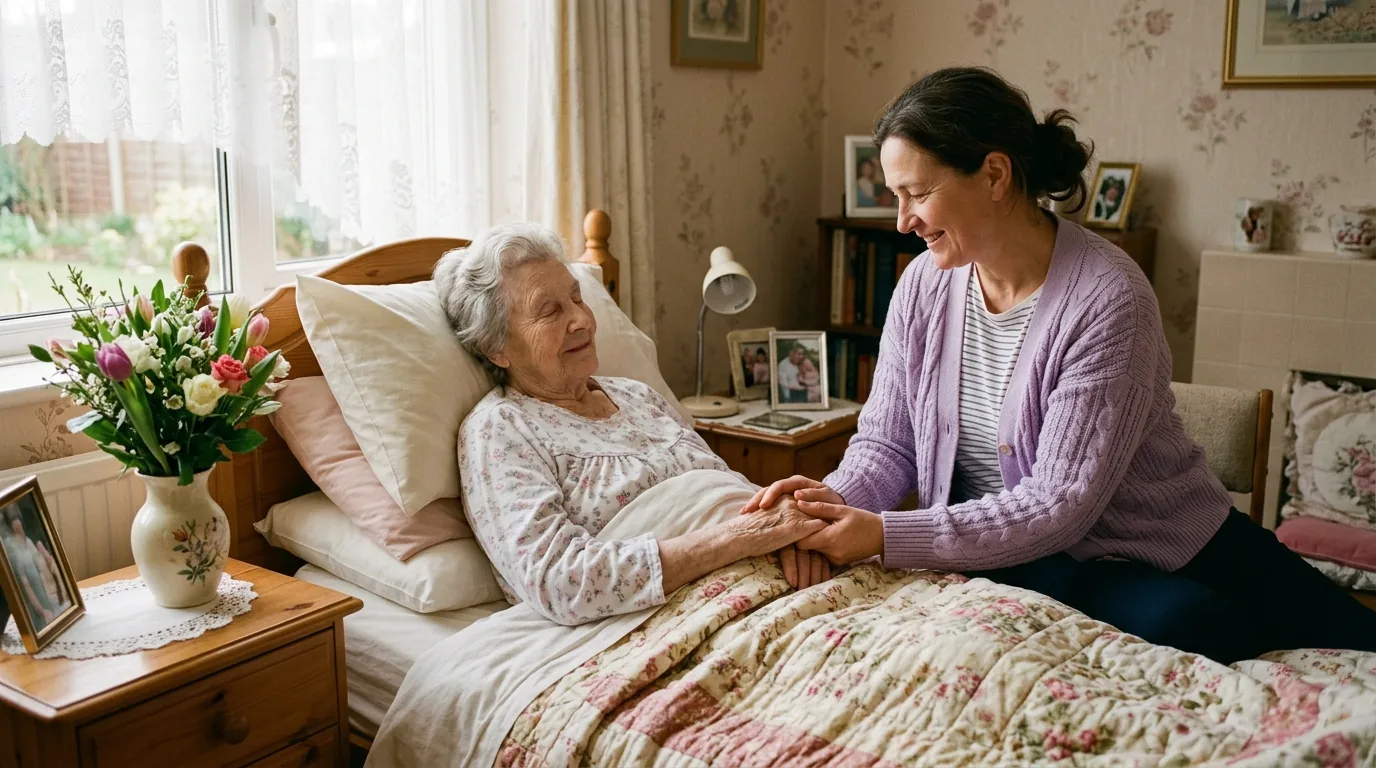
In an end-of-life context, physical capabilities decline significantly, and the person may spend the majority of their time resting in bed. A carer experienced in end of life palliative care provides highly specialized, sensitive support:
- Specialized Comfort & Positioning: Performing gentle, regular repositioning to alleviate pressure points, maintain skin integrity, and prevent painful pressure sores.
- Oral and Eye Hygiene: Meticulous mouth care with moist swabs, lip balms, and gentle eye cleansing to prevent dryness and ensure continuous comfort.
- Multidisciplinary Coordination: Working closely alongside NHS district nurses, GPs, hospice teams, and Macmillan/Marie Curie nurses—alerting medical teams if breakthrough pain or nausea requires symptom medication adjustments.
- Anticipatory Emotional & Spiritual Presence: Providing a quiet, reassuring presence at the bedside, reading favourite books, playing soothing music, and supporting family members through anticipatory grief.
- Dignity in Dying: Ensuring the final weeks, days, and hours are calm, unhurried, pain-free, and respectful of the person’s end-of-life wishes.
Need Dedicated End of Life Palliative Care at Home?
Bypass traditional agency waiting lists and save up to 35% on care fees. Filter and connect directly with fully vetted, self-employed private carers across the UK experienced in palliative and end-of-life support.
👉 Browse Specialist Palliative Carers | 📞 Call 0333 344 0645
Standard Care vs End of Life Palliative Care: A Direct Comparison
To help you evaluate what level of support your family requires, here is how the two approaches compare across core care pillars:
- Primary Objective: Standard care focuses on promoting independence, mobility, and sustaining everyday routines. End of life palliative care focuses on symptom control, total physical comfort, emotional peace, and dignity.
- Physical Routines: Standard care involves meal preparation, outings, and active housekeeping. Palliative care involves gentle bed-care routines, pressure-area relief, oral hydration swabs, and preserving energy.
- Clinical Collaboration: Standard care requires basic GP and prescription coordination. Palliative care requires seamless, close collaboration with district nurses, palliative care doctors, and hospice teams managing specialized medications.
- Caregiver Demeanour: While all carers offer warmth and empathy, palliative carers have specialized emotional resilience, understanding the physical signs of the dying process and offering steady reassurance during vulnerable moments.
Why Families Choose Direct Palliative Care with No1 Healthcare
Arranging end-of-life care through traditional managed agencies often means having multiple rotating carers visiting your home, which can cause anxiety and distress during a deeply sensitive time. At No1 Healthcare Private Carers, we empower families to take full control.
Our platform enables you to:
- Filter Specifically for Palliative Expertise: Search and connect with independent professionals who have dedicated training and extensive experience in end of life palliative care, syringe driver observation, and bereavement support.
- Ensure Complete Continuity: Choose a single dedicated live-in palliative carer who stays in the home, offering continuous 24/7 one-to-one presence without the disruption of rotating agency shift workers.
- Save up to 35% on Care Costs: By engaging self-employed professionals directly, you eliminate high agency administrative fees, making continuous private care significantly more affordable.
- Uncompromising Safety & Vetting: Every professional on our platform undergoes rigorous multi-stage vetting, including Enhanced DBS/PVG checks, right-to-work verification, and verified professional references.
- Flexible Respite Support: If you are the primary family caregiver, you can also arrange temporary private respite care to step in while you rest and recharge.
Looking for compassionate, specialist support for your loved one?
Call our dedicated care advisory team today on 0333 344 0645 or find a verified palliative carer in your local area.
Frequently Asked Questions About Standard vs Palliative Care
What is the main difference between standard care and palliative care?
Standard home care focuses on assisting with daily activities (such as cooking, cleaning, dressing, and companionship) to help an older adult remain active and independent. Palliative care focuses on relieving pain, managing distressing physical symptoms, and providing emotional support for individuals living with advanced or terminal illnesses.
Does palliative care only mean end of life care?
No. While all end-of-life care is palliative, palliative care can actually begin much earlier—at the point of diagnosis of a life-limiting condition—and can be provided alongside active treatments to improve quality of life over months or years.
Can end of life palliative care be delivered safely at home?
Yes. With the support of a dedicated private live-in carer working alongside NHS community nurses and local hospice teams, the vast majority of individuals can spend their final days peacefully, comfortably, and safely in their own home rather than in a hospital ward.
What specific comfort measures does an end of life palliative carer provide?
A palliative carer provides gentle repositioning to prevent pressure sores, regular oral hygiene and lip moisturising, skin care, assistance with personal washing in bed, a calm and soothing presence, and timely communication with visiting district nurses to ensure pain medications remain effective.
How can I find a carer with specific end of life experience on No1 Healthcare?
Our platform allows you to specifically filter candidate profiles by their specialized skills and experience in palliative and end-of-life care. You can review their verified qualifications, read reviews from other UK families, and interview them directly via phone or video call before making any commitment.
{
"@context": "https://schema.org",
"@graph": [
{
"@type": "Article",
"@id": "https://www.no1healthcare.co.uk/care-guide/difference-between-standard-care-and-palliative-care-uk#article",
"isPartOf": {
"@type": "WebPage",
"@id": "https://www.no1healthcare.co.uk/care-guide/difference-between-standard-care-and-palliative-care-uk",
"url": "https://www.no1healthcare.co.uk/care-guide/difference-between-standard-care-and-palliative-care-uk",
"name": "Demystifying Support: The Difference Between Standard Care and End of Life Palliative Care"
},
"headline": "Demystifying Support: The Difference Between Standard Care and End of Life Palliative Care",
"description": "Understand the difference between standard home care and end of life palliative care. Learn about daily routines, comfort measures, and finding specialist carers.",
"image": "https://cdn.prod.website-files.com/6820570f88d6d1e46ef8247d/6ab26ad141cb0d6c434ee099_difference-between-standard-care-and-palliative-care-uk.webp",
"datePublished": "2026-09-21T11:47:19.414Z",
"dateModified": "2026-09-22T11:47:19.420Z",
"mainEntityOfPage": "https://www.no1healthcare.co.uk/care-guide/difference-between-standard-care-and-palliative-care-uk",
"inLanguage": "en-GB",
"author": {
"@type": "Organization",
"@id": "https://www.no1healthcare.co.uk/#organization",
"name": "Team No1 Healthcare",
"url": "https://www.no1healthcare.co.uk"
},
"publisher": {
"@type": "Organization",
"@id": "https://www.no1healthcare.co.uk/#organization",
"name": "No1 Healthcare Private Carers",
"url": "https://www.no1healthcare.co.uk",
"logo": {
"@type": "ImageObject",
"url": "https://cdn.prod.website-files.com/6820570f88d6d1e46ef8247d/6820be0b253219358cc85e4f_no1-logo.webp"
}
}
},
{
"@type": "BreadcrumbList",
"@id": "https://www.no1healthcare.co.uk/care-guide/difference-between-standard-care-and-palliative-care-uk#breadcrumb",
"itemListElement": [
{
"@type": "ListItem",
"position": 1,
"name": "Home",
"item": "https://www.no1healthcare.co.uk"
},
{
"@type": "ListItem",
"position": 2,
"name": "Care Guides",
"item": "https://www.no1healthcare.co.uk/care-guides"
},
{
"@type": "ListItem",
"position": 3,
"name": "Standard Care vs End of Life Palliative Care",
"item": "https://www.no1healthcare.co.uk/care-guide/difference-between-standard-care-and-palliative-care-uk"
}
]
},
{
"@type": "FAQPage",
"@id": "https://www.no1healthcare.co.uk/care-guide/difference-between-standard-care-and-palliative-care-uk#faq",
"mainEntity": [
{
"@type": "Question",
"name": "What is the main difference between standard care and palliative care?",
"acceptedAnswer": {
"@type": "Answer",
"text": "Standard home care focuses on assisting with daily activities (such as cooking, cleaning, dressing, and companionship) to help an older adult remain active and independent. Palliative care focuses on relieving pain, managing distressing physical symptoms, and providing emotional support for individuals living with advanced or terminal illnesses."
}
},
{
"@type": "Question",
"name": "Does palliative care only mean end of life care?",
"acceptedAnswer": {
"@type": "Answer",
"text": "No. While all end-of-life care is palliative, palliative care can actually begin much earlier—at the point of diagnosis of a life-limiting condition—and can be provided alongside active treatments to improve quality of life over months or years."
}
},
{
"@type": "Question",
"name": "Can end of life palliative care be delivered safely at home?",
"acceptedAnswer": {
"@type": "Answer",
"text": "Yes. With the support of a dedicated private live-in carer working alongside NHS community nurses and local hospice teams, the vast majority of individuals can spend their final days peacefully, comfortably, and safely in their own home rather than in a hospital ward."
}
},
{
"@type": "Question",
"name": "What specific comfort measures does an end of life palliative carer provide?",
"acceptedAnswer": {
"@type": "Answer",
"text": "A palliative carer provides gentle repositioning to prevent pressure sores, regular oral hygiene and lip moisturising, skin care, assistance with personal washing in bed, a calm and soothing presence, and timely communication with visiting district nurses to ensure pain medications remain effective."
}
},
{
"@type": "Question",
"name": "How can I find a carer with specific end of life experience on No1 Healthcare?",
"acceptedAnswer": {
"@type": "Answer",
"text": "Our platform allows you to specifically filter candidate profiles by their specialized skills and experience in palliative and end-of-life care. You can review their verified qualifications, read reviews from other UK families, and interview them directly via phone or video call before making any commitment."
}
}
]
}
]
}
.png)
.png)
.png)
.svg)